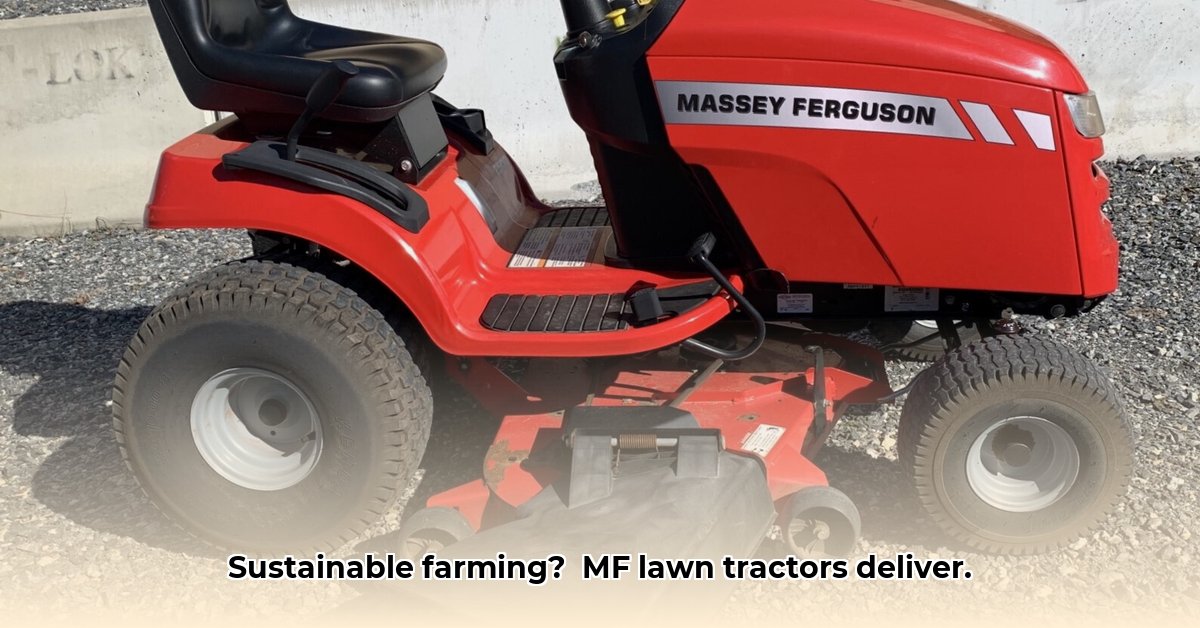
Massey Ferguson GC1700 Series: A Preliminary Assessment
Thinking about a lawn tractor for sustainable farming or landscaping? The Massey Ferguson GC1700 series warrants consideration. This review offers an initial assessment based on available information, highlighting strengths, weaknesses, and areas needing further investigation. We'll explore ease of use, performance, sustainability, and compare it to competitors, ultimately helping you determine if the GC1700 fits your needs. For more information on Massey Ferguson sub-compact tractors, visit this helpful resource.
Features and Specifications: What We Know (and Don't)
The Massey Ferguson GC1700 targets small-scale farmers and landowners. Known features include user-friendly controls and a comfortable operator station, prioritizing ease of use and reduced operator fatigue – crucial for efficient, sustainable practices. However, key specifications such as engine details (horsepower, torque, fuel type) remain unavailable at the time of writing. This information gap significantly limits a complete performance and cost analysis. Further research is essential to fill these crucial data gaps.
Performance Assessment: Real-World Capabilities
Based on available information, the GC1700 appears suitable for tasks like mowing, light tilling, and hauling modest loads. Its compact size enhances maneuverability in confined spaces. However, the lack of detailed specifications prevents definitive conclusions on its performance across various terrains or with heavier-duty applications. Independent testing and comprehensive user reviews are needed to fully assess its capabilities. Does it efficiently handle varied soil types? How does its performance compare to competitors in real-world conditions? These questions remain unanswered.
Sustainability Considerations: Environmental Impact
Sustainable agriculture demands environmentally conscious equipment. While the GC1700's user-friendly design promotes efficiency (reducing potential fuel waste through operator comfort), crucial data on fuel efficiency, emissions, long-term maintenance requirements, and end-of-life disposal methods are currently missing. This absence prevents a comprehensive evaluation of its overall environmental footprint. Without this information, a complete sustainability assessment is impossible. What is its fuel consumption per hour of operation? What are its emissions levels? These are vital questions needing immediate attention.
Comparison with Competitors: A Preliminary Look
Direct comparison to competitors is hampered by the incomplete specifications of the GC1700. The market offers a variety of compact tractors, each with strengths and weaknesses. Some may boast higher horsepower or more extensive attachments, while others focus on affordability or ease of maintenance. The optimal choice depends on individual needs and priorities. Does the GC1700 offer a better price-performance ratio than similar models? Further research comparing across several key features—fuel efficiency, maintenance costs, and durability—is necessary.
Pros and Cons: A Balanced View
| Pros | Cons |
|---|---|
| User-friendly and comfortable design | Missing key technical specifications (engine, fuel efficiency) |
| Suitable for smaller-scale operations | Uncertainty regarding long-term maintenance and repair costs |
| Potentially cost-effective | Lack of data on emissions and end-of-life environmental impact |
| Good maneuverability | Limited direct comparison with competitors |
Conclusion: Awaiting Further Data
This review provides a preliminary assessment of the Massey Ferguson GC1700. While its ease of use and comfortable design are promising for sustainable farming practices, the lack of comprehensive data significantly limits a definitive evaluation. Further research is crucial, including detailed specifications, independent performance testing, user reviews, and a thorough comparison against competitors. Only then can we offer a complete and informed recommendation regarding the GC1700's suitability for sustainable agriculture. We encourage future research to focus on filling these vital data gaps.